
Every year since 2012, I’ve kept track of what books I read the year before. Inspired by the goal of reading 52 books in a year, achieved once in 2015, I start every year by looking at the old lists and starting the new.
I love having done this, as looking back at those years not only reminds me of the books I’ve read, it brings the past back to life all at once. I just opened the 2014 list on a lark and saw that I read Murder in the Cathedral, by T.S. Eliot somewhere near the middle of the year. I bought that book at Re:Reading Used Books, and all of a sudden I’m back in those shelves as a much (much) younger man.
It also lets me keep track of any trends that might or might not be visible in my reading. In 2016, I started keeping track of the women authors I read, inspired (even if a bit late) by 2014 and The Year of Reading Women. In 2017 I kept track of racialized authors. The results were fascinating, troubling, and thought-provoking. As a genre-lover (ooh, that sounds like a slur), it was hard enough to feel that I was “keeping up” with the big releases every year, and to then consider if I was reading enough women and minority authors was another challenge. But I think the task of keeping track is worth it, because even if I don’t come close to 50/50 or the challenging but noble goal of reading only minority authors, it helps me understand myself better, and what I choose to read.
“Choosing” is the name of the game, people: my newborn son takes enough energy out of me as it is, so if I want to read a book a week (yikes!), then I need to pick and choose carefully! Finding the hours to read in a week is tough without a kid as it is!
In any case, on to the stats!
The Breakdown
Books read: 18
A tough year, but for good reasons! I got married, had The Kid, and continued to work at my new position at The Job. I should have read more, but I did a lot so I’m not too upset with myself.
Authors
Racialized authors: 3, 25%
Female authors: 2, 17%
Male authors: 7, 58%
A bit misleading; this counts authors but not books. I read a series by Ursula K. Le Guin, so if you go by the amount of books read, it’s 40% female/male, instead of the dismal 17%.
No way to read the other number, though: that dismal 17% returns for the racialized authors. I made a distinct effort in the summer…but that effort was too hard to maintain as The Kid was born. Note that, though: is reading racialized authors effort? (No, I just read what was at hand by the end of the year. I read one new book, and the rest came from the backlog, but note that that’s how my subconscious chose to write it the first time. Interesting! And that’s why I do this!).
Genres
Sociology: 2
Fiction: 1
History: 2
Fantasy: 8
Historical Fiction: 1
Science Fiction: 2
Memoir: 1
Biography: 1
Nothing particularly interesting here, other than I wasn’t sure to categorize Da Vinci, by Walter Isaacson, as “history” or “biography”. I settled on biography, but not without some reservations. Sorting Where Beauty Survived by George Elliott Clarke was much easier, if only because the subtitle is “A Memoir of Race, Family Secrets, and Africadia.” Thanks George, for doing that work for me!
Decades:
1960s: 2
1970s: 2
1990s: 1
2000s: 5
2010s: 5
2020s: 3
Probably not enough books in the list to see a pattern, but 2023 had a distinct tail in the 2010s and 2020s (god, there’s enough years in the 2020s to really make them count).
My favourite
The Tombs of Atuan, 1970, by Ursula K. Le Guin
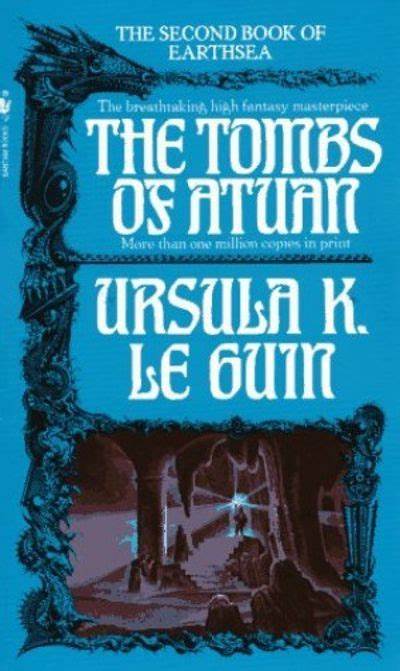
Big fan of Ms. Le Guin here (“Ma’am”). I got the collected illustrated edition of the Books of Earthsea for Christmas in 2024 and, by chance, Shelved by Genre started their first unit in Earthsea, so I read along with them and explored Earthsea for the first time. Although they were almost all bangers, as the kids say, Tombs stuck out for it’s dark, oppressive, haunting and yet hopeful tone. Confusing in the best way for the best reasons, it felt so wonderfully fantastic in a way that Le Guin excelled at.
The Biggest Surprise
The Imperial Cruise, 2009, by James Bradley
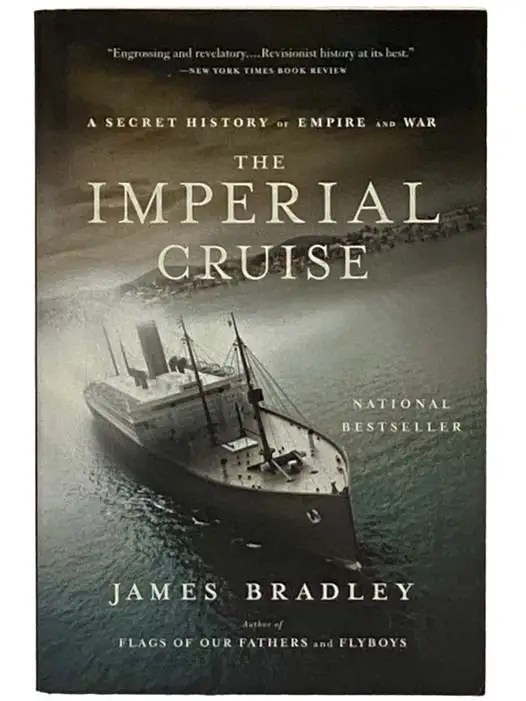
A gift from my grandfather from years ago, I held on to it because I wanted to read the last thing he gave me before he died. I finally got around to reading it, mostly in the OB/GYN waiting room, and found it was an engrossing and horrifying tale of America’s misadventures in their Pacific Empire. The scholarship is old by now and almost certainly was well-known at the time (I can’t imagine in 2009 historians weren’t aware that America’s colonization of the Philippines was *bad*), but I didn’t know that much and the history was riveting if, as said before, horrifying. One thing I loved about it was that the story of the titular cruise, one undertaken by Taft and Alice Roosevelt, spent significantly more time on the places they went rather than engage in character-analysis of those two. I came away from the book with anything, it was an accessible study of Why Empire Is Bad, which is what that topic deserves. Learning about them white-folk wasn’t the point of the book, and I feel that Bradley framed it very well; almost to the point I’d believe the book was pitched one way and written another.
The One I Thought About the Most
The Anxious Generation, 2024, by Jonathan Haidt
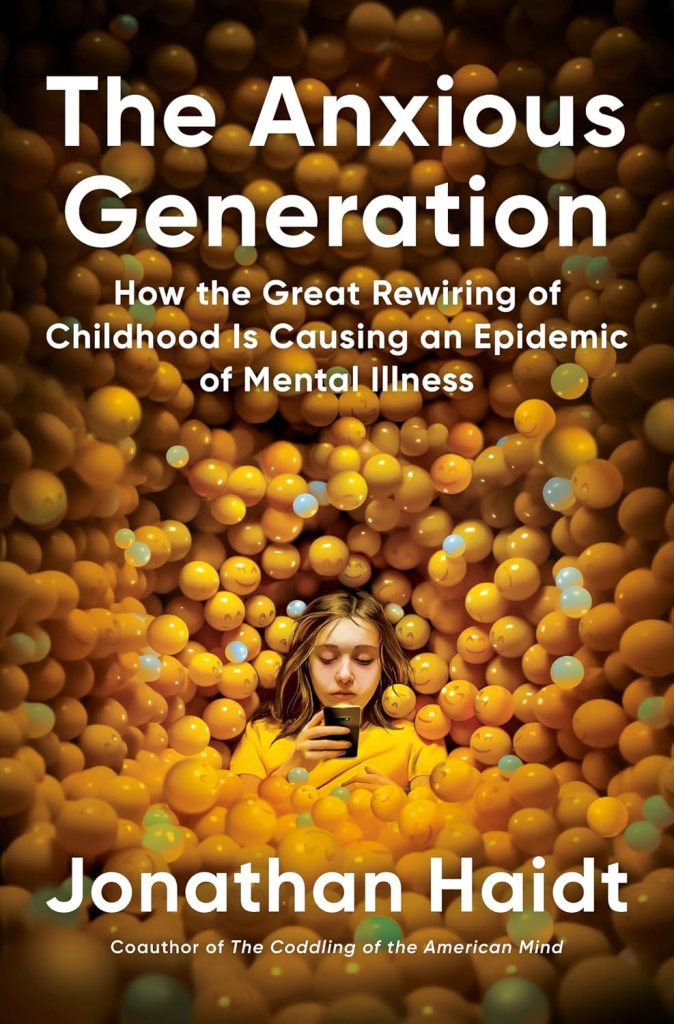
I. HATE. CELLPHONES.
Jk, I actually think they’re great. I hate social media with a burning fucking passion, and 2024 was the Year I Disconnected. Twitter? Gone. Bluesky? Picked up and then dropped. Instagram? Deleted. Facebook? Eradicated. Hell, I started a blog on a website that I host, so what’s that tell you about how I feel about the tech companies?
I thought a lot about this book because of The Job. Suffice it to say I think that tech is both liberating and also inherently corrupting (I think there’s a reason Cyberpunk and Sci-Fi both posit that increasing technology almost always leads to increased human suffering (thanks, Star Trek, for making me put that “almost”)). And let me be clear: it’s not the computer’s fault, it’s the bastards making them. I work with kids and I’ll tell ya, if I could throw TikTok into the ocean, I would. We, as a people, would do better with more reading, more talking, and less life mediated through a black box.
The book has got it’s methodological problems, which Haidt admits to and I’m not qualified to comment on, but it’s worth a read and a thinking-through.
Also, delete Twitter. You’ll be happier for it.
So What About 2025?
That’s that! I have high hopes to read more as I dedicate my time intentionally, and I’m already off to an OK start. One down, one partway through!
I’m staring at my backlog and the problem is definitely the length of some of my put-off darlings. I’m looking at you, Diarmuid MacCulloch’s 1161-page Christianity: The First Three Thousand Years. I’ll try to balance those with some fast, quick, and fun reads, but I anticipate this year will be quality over quantity.
Let’s hope! And then pick up the book; after all, it’s all we can do.
 Electronic Ephemera