Last year, I finished a first draft. This wasn’t from scratch; some of the chapters were already done, so it was probably only about 80k words. That was a lot of work, and I’m rightfully proud of it.
In that same time, I’ve written maybe two blog posts.
Can you guess which one bothers me more?
There’s a strange feeling I get when I sit down to just let my thoughts out. They fight each other. I’d like to say they scramble through the door all at once, blocking each other in their rush to escape. But that’s not true. They’re too good at fighting each other; they kill too effectively and I’m left with nothing.
In the end, I’m left staring at a blank screen without the energy or endurance to just let it go. Oh, I had lots of ideas. Just look at them, all dead out there.
I want to share my ideas. It’s just that I want to barf them out (hell, isn’t that the reason I’m paying hosting for this blog?). But who wants to read barfed out ideas when there’s roughly 9 billion movies on Netflix right now? I have 6 unread books on my desk right now. No-one needs more thoughtvomit in their life. Not even the man writing this, in truth. So where does that leave me?
I didn’t start writing because I wanted to be read, which is its own problem but that’s for another day. I started writing because I wanted to tell stories, and nowhere is vomiting part of that.
I used to had a saying about Twitter that if I posted, it would be to announce a new post or the tweet would itself be worth reading. What does it mean to be “worth” reading?
This is the most honest I’ve been about my process in months. Is it worth anything?
Draft 1 of The Secret Project: The Secreting is finished! I conservatively wrote 50k words (likely more like 70(!)), and now we’re in the editing phase. I find Draft 1-2 is far, far harder than any other editing process, and that’s saying something for this behemoth. The goal is to get Draft 3 to between 150-180k words, and we’re currently at 215k, and the first three edited chapters are…longer. So there’s lots of work to be done there.
But there are storm clouds ahead, O Ahab. The Kid went from 3 months to 15, and if you know what that means, you know. The Job sucked more of my life than I thought possible, even though I love it. Luckily, I was able to avoid the worst of the world’s daily crises, but thanks to The Job, I have sector-specific crises to manage.
Life, as they say, goes on. But it has gone on, which means looking back at what happened.
So let’s break it down a bit:
The Breakdown
Books read: 20
A better year than last, but not by much. My message from last year remains the same: I should have read more, but considering it all, I did okay!
Authors
Total authors: 14
Racialized authors: 2, 15%
Female authors: 5, 35%
Male authors: 9, 65%
In one respect better than last, in another, far worse. Female authors made a big jump, but only in raw numbers. Factoring in the “Le Guin effect” from last year, I went from 40% female to 35%. Statistically significant? Iunno, not enough of a numbers nerd to calculate that. But raw numbers made a big leap, and I’d like to keep that going.
Genres
Poetry: 1
Fiction: 1
Urban Fantasy: 1
Fantasy: 8
Historical Fiction: 1
Science Fiction: 5
History: 3
Some interesting tidbits here! Poetry returns after a bit of a hiatus, and science fiction stepped up thanks to Shelved by Genre’s series on William Gibson, but most of the other categories were, strangely, identical to last year. Fantasy was propelled by, again, Shelved by Genre, this time their Mercedes Lackey series, but that feels right to me. I’m obviously going to be fantasy-heavy.
Decades:
1930s: 1
1960s: 1
1980s: 6
1990s: 3
2000s: 2
2010s: 2
2020s: 5
My favourite
They Flew: A History of the Impossible, 2023, by Carlos Eire
It’s noteworthy, that even though I’m a(n) historian, a history book was my hand’s-down favourite for 2025. I was spellbound from the first pages, and Eire writes with such clear and compelling prose that I followed this curious history of flying saints from start to finish, all 512 pages (minus the notes; if I’m not being paid to read endnotes, I’ll trust the author).
This is one of those fantastic books of history where answering the question “what is it about” leads to such rich and generous thoughts that you’re grateful to the author for so thoroughly rewarding you for reading their work. What is it about? In the 15th and 16th centuries, Catholic saints had a tendency to fly around a lot, sometimes even translocating across the Atlantic when they were feeling sufficiently holy. Did they? Almost certainly not; after all, human flight is impossible
What, then, to make of the pages and pages and pages of documentary and eye-witness evidence, that say they did? Of the testimonies of popes and princes that they met and talked and saw those who did? What to make of the fact that disregarding that evidence requires you to pass judgement on historical fact because, to you, it is impossible, and yet the historical actors could have taken you to the very church or monastery where you could see St. Joseph of Cupertino fly that very Sunday? What does it mean, not to believe something impossible is true, but to believe that what is possible is greater than our imaginings?
I don’t want to try and summarize Eire’s argument, as that’s too much for my memory right now, but I highly recommend it, and I’m very grateful I picked it up.
The Biggest Surprise
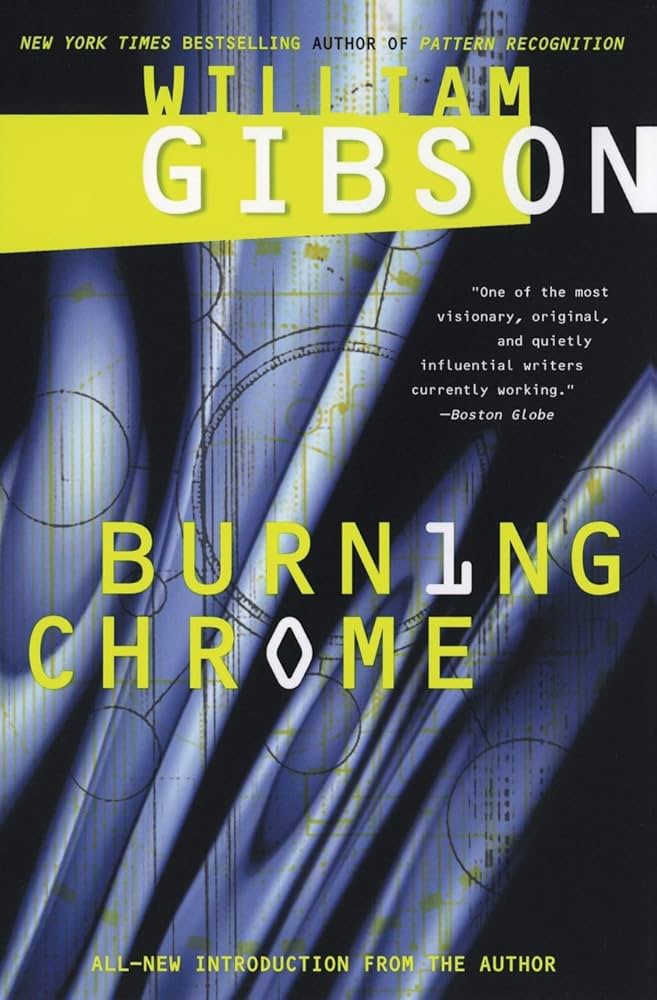
Burning Chrome, 1986, by William Gibson
A rip-roaring brainmelter from “Johnny Mnemonic” to “Burning Chrome.” Electric. Like snorting lasers and drinking battery acid. Hook 240v straight into your neurons; if you smell burning copper don’t sweat it and just make new memories. Give yourself a new name; it’s the future. Delete your past. Makes you want to fight and fuck and write. Some stories were better than others but goddamn Gibson empties the magazine on you. You’ll need a comedown when you’re done.
The One I Also Wanted to Be My Favourite
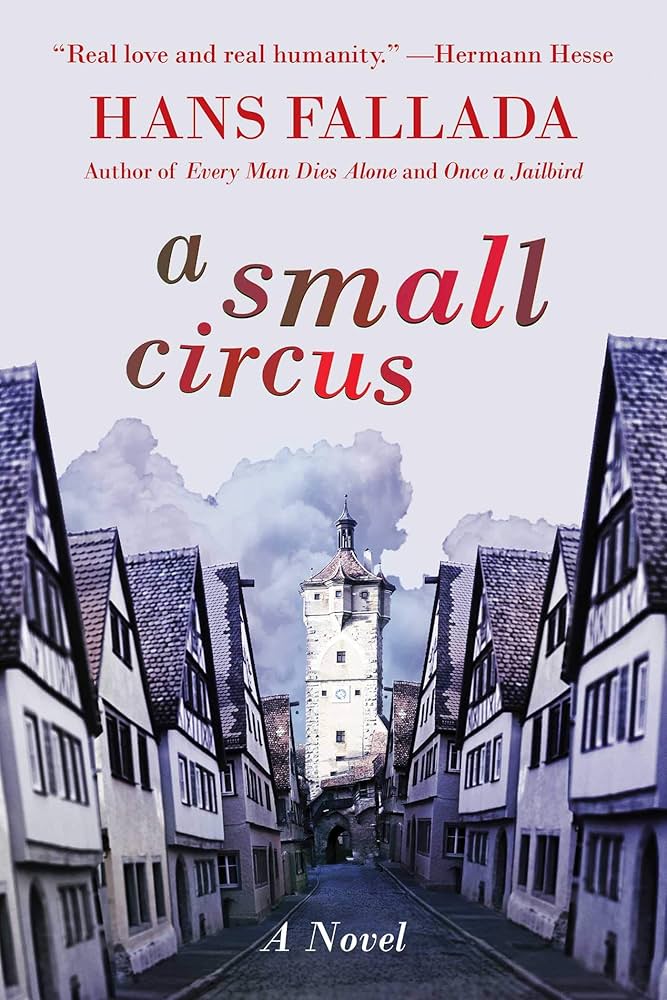
A Small Circus, 1931, by Hans Fallada
If you were to ask me my favourite book, it would, as ever, remain The Lord of the Rings. But if you were to ask me who my favourite writer is, hands-down it’s Hans Fallada. Again, this isn’t time for a review, but I picked up A Small Circus knowing nothing about it, only that I adored Every Man Dies Alone, and I still needed to read Little Man, What Now?
Not forgetting what I just said about Eire, you actually do need to know a little bit about this one to appreciate it: set in a small town in the German countryside, it’s about a riot and a criminal trial, and the absolute failure of German society in the Weimar years. The book was written in 1929 and, although they’re present, the Nazis are hardly mentioned as they only scored a paltry return in the 1928 election. We all know that would change, and change quickly, so the experience of reading about a society drifting through a foggy sea all the while knowing what is coming is hallucinatory. It can’t be real, but Fallada’s gift is making it all so extremely so.
And it’s so damn funny.
So What About 2026?
It’s to be a year of routines and habits, starting with improving these numbers. I looked back to the 2023 list and I was at 39 books, and with varied authors and diverse backgrounds. I need more, and it’s past time I gave it to myself.
Page by page, word by word; the mountain will not climb itself.
Every year since 2012, I’ve kept track of what books I read the year before. Inspired by the goal of reading 52 books in a year, achieved once in 2015, I start every year by looking at the old lists and starting the new.
I love having done this, as looking back at those years not only reminds me of the books I’ve read, it brings the past back to life all at once. I just opened the 2014 list on a lark and saw that I read Murder in the Cathedral, by T.S. Eliot somewhere near the middle of the year. I bought that book at Re:Reading Used Books, and all of a sudden I’m back in those shelves as a much (much) younger man.
It also lets me keep track of any trends that might or might not be visible in my reading. In 2016, I started keeping track of the women authors I read, inspired (even if a bit late) by 2014 and The Year of Reading Women. In 2017 I kept track of racialized authors. The results were fascinating, troubling, and thought-provoking. As a genre-lover (ooh, that sounds like a slur), it was hard enough to feel that I was “keeping up” with the big releases every year, and to then consider if I was reading enough women and minority authors was another challenge. But I think the task of keeping track is worth it, because even if I don’t come close to 50/50 or the challenging but noble goal of reading only minority authors, it helps me understand myself better, and what I choose to read.
“Choosing” is the name of the game, people: my newborn son takes enough energy out of me as it is, so if I want to read a book a week (yikes!), then I need to pick and choose carefully! Finding the hours to read in a week is tough without a kid as it is!
In any case, on to the stats!
The Breakdown
Books read: 18
A tough year, but for good reasons! I got married, had The Kid, and continued to work at my new position at The Job. I should have read more, but I did a lot so I’m not too upset with myself.
Authors
Racialized authors: 3, 25%
Female authors: 2, 17%
Male authors: 7, 58%
A bit misleading; this counts authors but not books. I read a series by Ursula K. Le Guin, so if you go by the amount of books read, it’s 40% female/male, instead of the dismal 17%.
No way to read the other number, though: that dismal 17% returns for the racialized authors. I made a distinct effort in the summer…but that effort was too hard to maintain as The Kid was born. Note that, though: is reading racialized authors effort? (No, I just read what was at hand by the end of the year. I read one new book, and the rest came from the backlog, but note that that’s how my subconscious chose to write it the first time. Interesting! And that’s why I do this!).
Genres
Sociology: 2
Fiction: 1
History: 2
Fantasy: 8
Historical Fiction: 1
Science Fiction: 2
Memoir: 1
Biography: 1
Nothing particularly interesting here, other than I wasn’t sure to categorize Da Vinci, by Walter Isaacson, as “history” or “biography”. I settled on biography, but not without some reservations. Sorting Where Beauty Survived by George Elliott Clarke was much easier, if only because the subtitle is “A Memoir of Race, Family Secrets, and Africadia.” Thanks George, for doing that work for me!
Decades:
1960s: 2
1970s: 2
1990s: 1
2000s: 5
2010s: 5
2020s: 3
Probably not enough books in the list to see a pattern, but 2023 had a distinct tail in the 2010s and 2020s (god, there’s enough years in the 2020s to really make them count).
My favourite
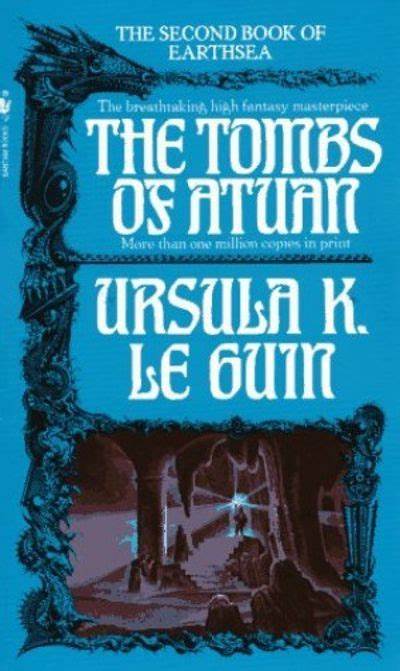
The Tombs of Atuan, 1970, by Ursula K. Le Guin
Big fan of Ms. Le Guin here (“Ma’am”). I got the collected illustrated edition of the Books of Earthsea for Christmas in 2024 and, by chance, Shelved by Genre started their first unit in Earthsea, so I read along with them and explored Earthsea for the first time. Although they were almost all bangers, as the kids say, Tombs stuck out for it’s dark, oppressive, haunting and yet hopeful tone. Confusing in the best way for the best reasons, it felt so wonderfully fantastic in a way that Le Guin excelled at.
The Biggest Surprise
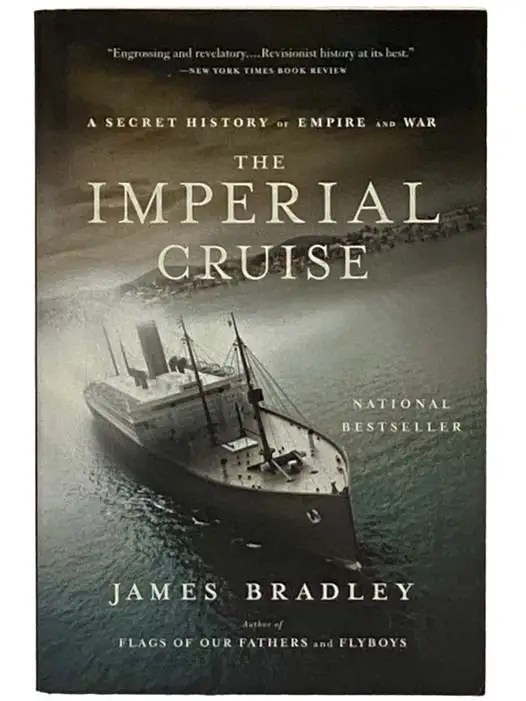
The Imperial Cruise, 2009, by James Bradley
A gift from my grandfather from years ago, I held on to it because I wanted to read the last thing he gave me before he died. I finally got around to reading it, mostly in the OB/GYN waiting room, and found it was an engrossing and horrifying tale of America’s misadventures in their Pacific Empire. The scholarship is old by now and almost certainly was well-known at the time (I can’t imagine in 2009 historians weren’t aware that America’s colonization of the Philippines was *bad*), but I didn’t know that much and the history was riveting if, as said before, horrifying. One thing I loved about it was that the story of the titular cruise, one undertaken by Taft and Alice Roosevelt, spent significantly more time on the places they went rather than engage in character-analysis of those two. I came away from the book with anything, it was an accessible study of Why Empire Is Bad, which is what that topic deserves. Learning about them white-folk wasn’t the point of the book, and I feel that Bradley framed it very well; almost to the point I’d believe the book was pitched one way and written another.
The One I Thought About the Most
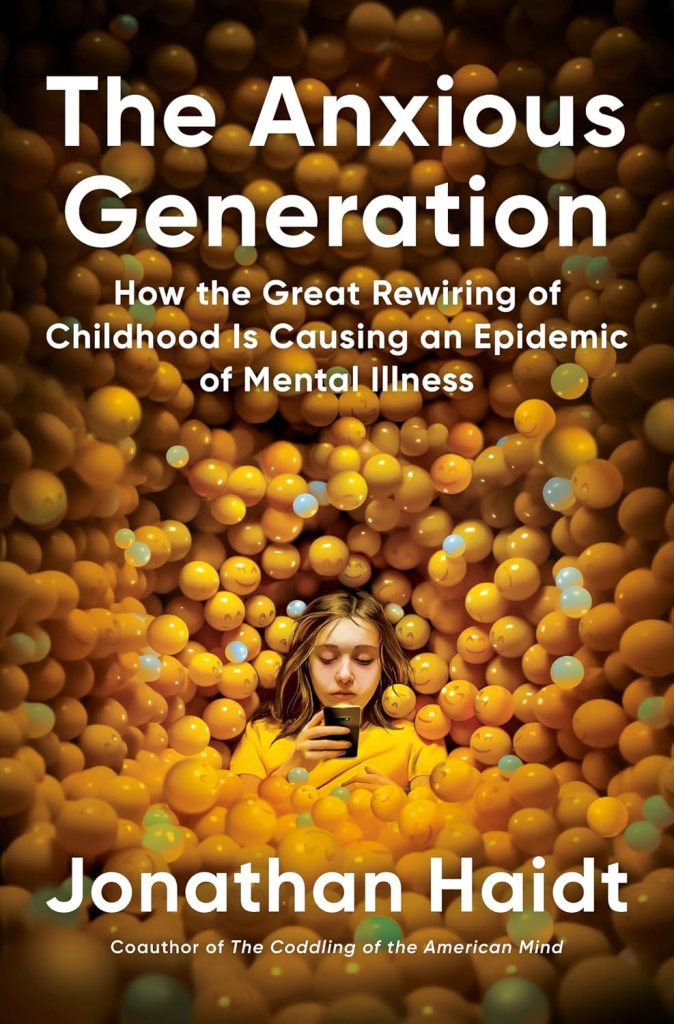
The Anxious Generation, 2024, by Jonathan Haidt
I. HATE. CELLPHONES.
Jk, I actually think they’re great. I hate social media with a burning fucking passion, and 2024 was the Year I Disconnected. Twitter? Gone. Bluesky? Picked up and then dropped. Instagram? Deleted. Facebook? Eradicated. Hell, I started a blog on a website that I host, so what’s that tell you about how I feel about the tech companies?
I thought a lot about this book because of The Job. Suffice it to say I think that tech is both liberating and also inherently corrupting (I think there’s a reason Cyberpunk and Sci-Fi both posit that increasing technology almost always leads to increased human suffering (thanks, Star Trek, for making me put that “almost”)). And let me be clear: it’s not the computer’s fault, it’s the bastards making them. I work with kids and I’ll tell ya, if I could throw TikTok into the ocean, I would. We, as a people, would do better with more reading, more talking, and less life mediated through a black box.
The book has got it’s methodological problems, which Haidt admits to and I’m not qualified to comment on, but it’s worth a read and a thinking-through.
Also, delete Twitter. You’ll be happier for it.
So What About 2025?
That’s that! I have high hopes to read more as I dedicate my time intentionally, and I’m already off to an OK start. One down, one partway through!
I’m staring at my backlog and the problem is definitely the length of some of my put-off darlings. I’m looking at you, Diarmuid MacCulloch’s 1161-page Christianity: The First Three Thousand Years. I’ll try to balance those with some fast, quick, and fun reads, but I anticipate this year will be quality over quantity.
Let’s hope! And then pick up the book; after all, it’s all we can do.